
Training for your first marathon can feel exciting, intimidating, and slightly ridiculous all at the same time.
One day, you are thinking, “I could probably do this.”
The next day, you are wondering how anyone runs 42.2 kilometres without falling apart.
That is completely normal.
Your first marathon does not need to be perfect. You do not need to train like an elite runner, buy every piece of gear, or understand every training term before you begin. What you need is a simple plan, patience, consistency, and a clear idea of what matters most.
This guide will walk you through the most important first marathon tips so you can train smarter, avoid common mistakes, and arrive at race day feeling more prepared.
Quick takeaway: Your first marathon is not about being perfect. It is about building steadily, practicing the basics, and arriving at the start line healthy and prepared.
First Marathon Help
If you are training for your first marathon and want the process to feel less overwhelming, the Break My Ordinary First Marathon Guide gives you a beginner-friendly roadmap for training, race week, gear, fueling, and race day.
Before you worry about pace charts, shoes, watches, or training plans, start with your goal.
For your first marathon, the goal does not have to be a fast finishing time. In fact, for many first-time marathon runners, the best goal is simple:
Finish healthy, stay steady, and enjoy the experience.
That might not sound exciting at first, but it matters. A marathon is a big challenge. If you make your first one all about hitting a specific time, it can add pressure before you even begin.
A better approach is to ask yourself:
Those are great first marathon goals.
You can always chase a faster time later. Your first marathon is about learning what it takes, proving to yourself that you can do it, and building a foundation for whatever comes next.
One of the easiest ways to feel overwhelmed is to train without structure.
You run when you feel motivated. You skip when life gets busy. You do a long run one week, then barely run the next. Eventually, race day starts getting closer and panic sets in.
A simple training plan helps prevent that.
A good beginner marathon plan usually includes:
You do not need a complicated plan. You need one that fits your current fitness, your schedule, and your life.
The best plan is not the hardest one. It is the one you can follow consistently.
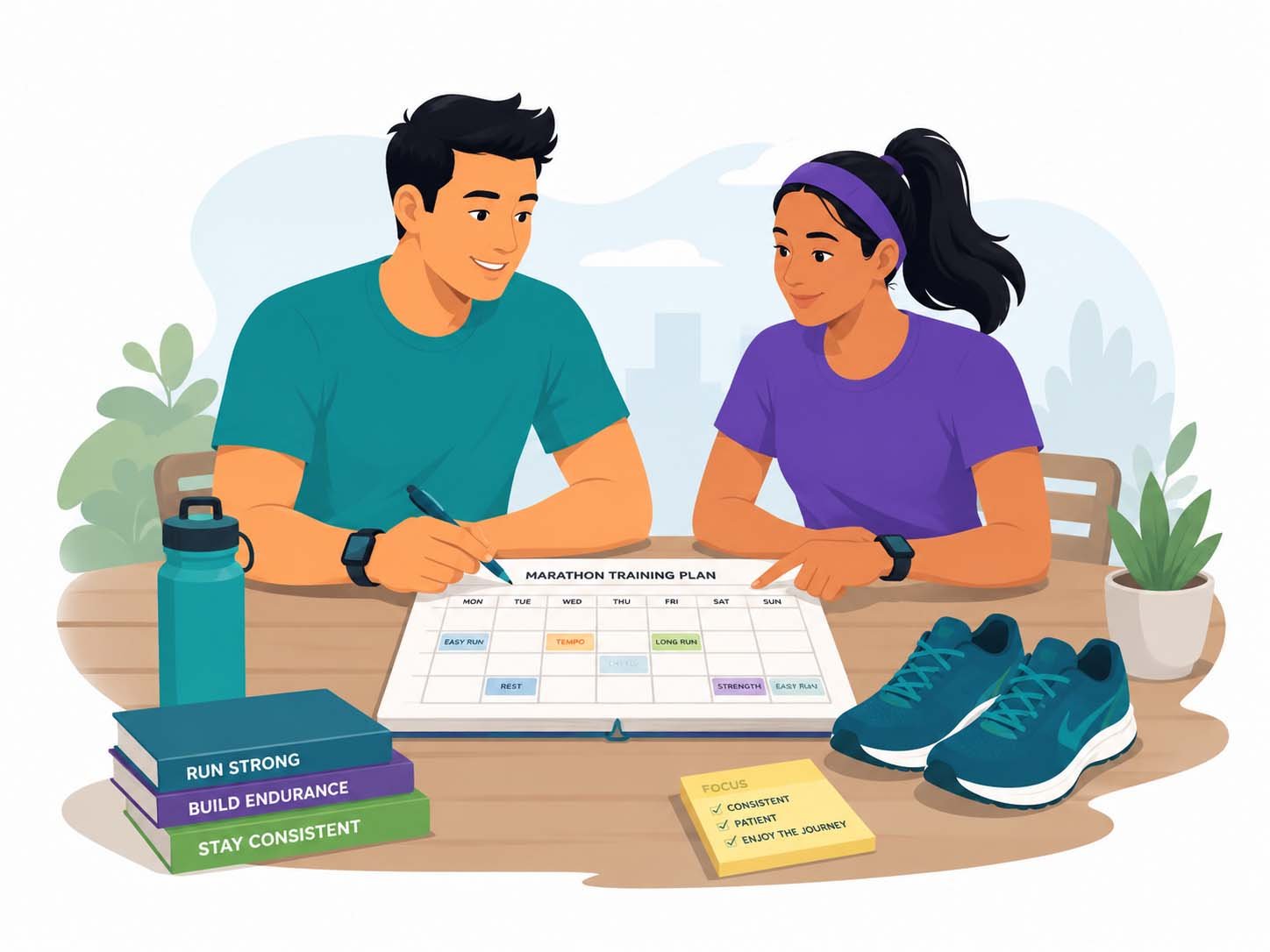
Your weekly long run is one of the most important parts of marathon training.
It helps your body get used to spending more time on your feet. It also gives you a chance to practice pacing, fueling, hydration, clothing, shoes, and mental focus.
But your long run should not feel like a race every week.
Most of your long runs should be done at an easy, controlled pace. You should finish tired, but not completely destroyed.
The goal is to build endurance over time, not prove your fitness every weekend.

This is one of the biggest mistakes new runners make.
Easy runs are supposed to feel easy.
That means you should be able to speak in short sentences while running. You should not be gasping, chasing a pace, or trying to beat your last run every time you head out the door.
Easy running builds your aerobic base, improves endurance, and helps your body recover between harder sessions.
If every run feels hard, you are probably running too fast too often.
For your first marathon, consistency matters more than intensity.
A marathon is not something you cram for.
You cannot skip weeks of training, panic, then suddenly pile on distance and expect your body to be happy about it.
Your muscles, joints, tendons, and bones need time to adapt. That is why gradual mileage is so important.
A smart beginner approach is to slowly increase your weekly distance and include easier weeks along the way. These lighter weeks give your body a chance to absorb the training.
Try not to think of recovery weeks as lost progress. They are part of the progress.
Also, if you miss a run, do not panic.
Missing one workout will not ruin your marathon. Trying to make up for it by cramming extra miles into the next few days might.
Simple rule: Do not chase missed miles. Get back on track.
Your body responds best to steady, repeatable training over time.
Fueling is one of the most important parts of marathon training, and it is something many beginners ignore until it is too late.
Once your long runs get longer, your body needs energy during the run. For most runners, that means taking in carbohydrates through gels, chews, sports drinks, or other simple fuel sources.
The key is to practice.
Do not wait until race day to find out whether a gel upsets your stomach or whether a sports drink works for you.
Use your long runs as practice sessions.
Before race day, you should know what breakfast works for you.
Some runners like toast with peanut butter. Some like oatmeal. Some like a bagel, banana, or simple carbs that are easy to digest.
The exact meal is less important than knowing it works.
Your race-day breakfast should be familiar, simple, and tested.
Do not wake up on marathon morning and try something new because you saw another runner eating it.
You should also practice taking fuel during long runs.
This helps you learn:
A marathon is long enough that poor fueling can make the final kilometres much harder than they need to be.
Training your gut is part of training your body.

Race day is not the time to experiment.
That applies to shoes, socks, shorts, shirts, sports bras, hats, belts, watches, gels, and anything else you plan to use.
Nothing new on race day.
Your long runs are your testing ground. Wear the shoes you might race in. Try the socks. Test the shorts. Use the same fuel. Figure out what rubs, what moves, what annoys you, and what feels comfortable after two or three hours.
Small issues can become big problems during a marathon.
A seam that bothers you at 8 km might become miserable at 32 km. A shoe that feels okay for a short jog might not feel great after hours of running. A shirt that looks good might chafe once you start sweating.
Comfort matters.
Your race-day gear should feel boringly reliable. That is a good thing.
The first half of a marathon should not feel heroic.
One of the most common first marathon mistakes is starting too fast. Race-day excitement is real. The crowd is cheering, your watch says you feel amazing, and everyone around you seems to be moving quickly.
The problem is that the marathon does not really start to show itself until later.
If you go out too fast, you may pay for it in the final 10 km.
A smart strategy is to start controlled. Let the early kilometres feel almost too easy. Settle into your rhythm. Focus on breathing, form, and staying calm.
You want to reach the halfway point feeling like you still have work to do, not like you have already used up your best energy.
On race day, your effort can feel easier than normal because of adrenaline.
That is why pacing matters.
Try not to chase runners around you. Some of them may be running a different goal pace. Some may be more experienced. Some may also be starting too fast.
Run your race.
If the weather is warm, the course is hilly, or you feel nervous, adjust your pace by effort. A marathon is not just about hitting numbers on your watch. It is about managing energy over a long distance.
A controlled start gives you the best chance to finish strong.
Training does not only happen while you are running.
It also happens when you recover.
Rest days, sleep, easy runs, mobility, strength work, and nutrition all help your body adapt. If you keep pushing without recovery, you increase your chances of burnout, sickness, or injury.
Some tiredness is normal during marathon training. You will have days where your legs feel heavy. You will have runs that feel harder than expected. That does not always mean something is wrong.
But sharp pain, worsening discomfort, or pain that changes your stride should not be ignored.
The goal is not to be tough every day. The goal is to make it to the start line healthy.
Recovery is not weakness. It is part of the plan.
You do not need to become a bodybuilder to run your first marathon, but basic strength training can help.
Strength work may improve your durability, posture, and ability to handle the repeated impact of running.
For beginners, simple is best.
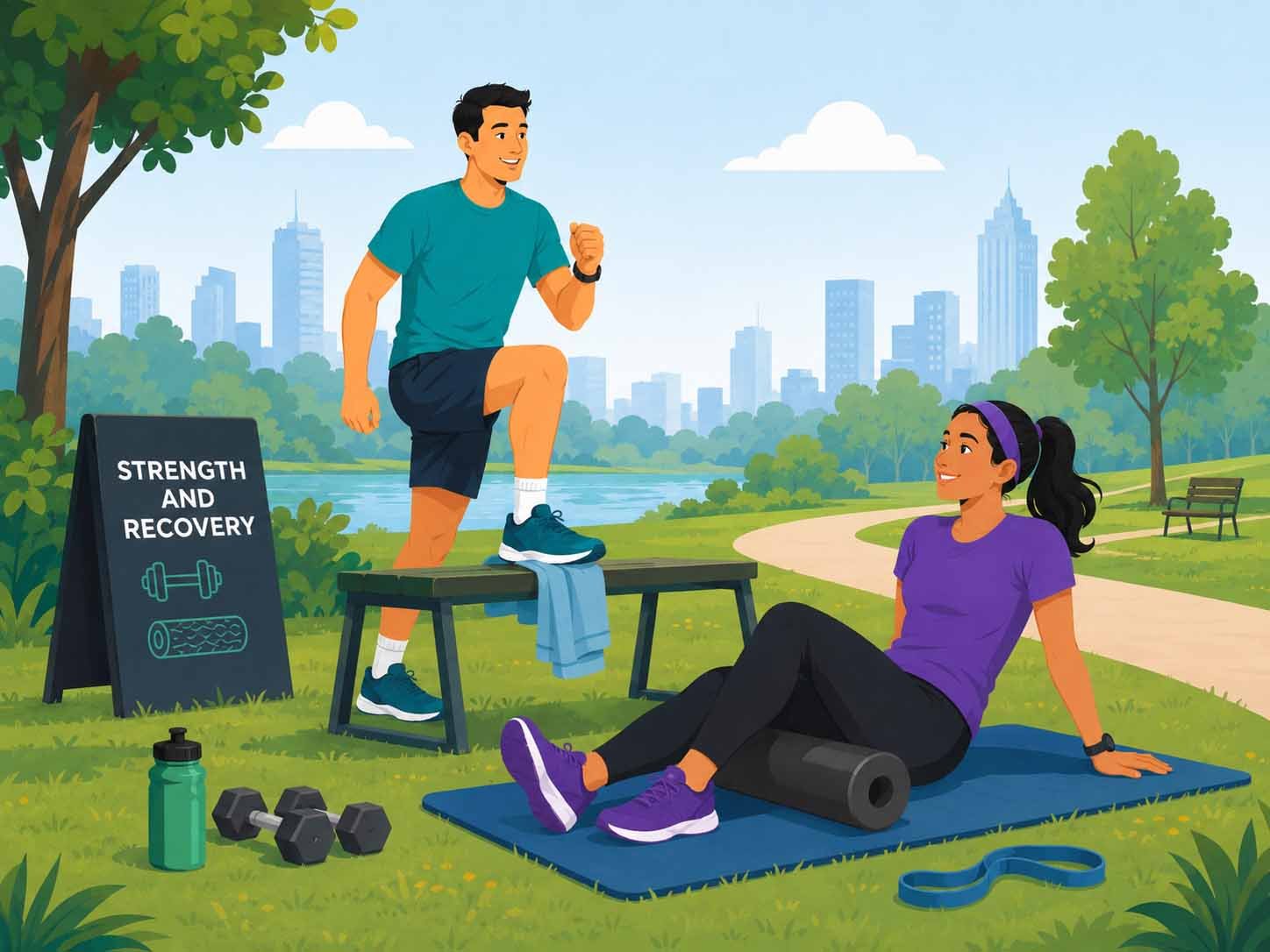
Focus on movements like:
You can start with one or two short strength sessions per week.
The goal is not to crush yourself in the gym. The goal is to support your running.
A little strength work done consistently can go a long way.
The final week before your marathon can feel strange.
You may feel excited, nervous, tired, restless, or convinced that you have not done enough. Many runners experience this.
But the final week is not the time to gain fitness.
It is the time to rest, sharpen up, and prepare.
Do not try to squeeze in one more big workout. Do not test new shoes. Do not suddenly change your diet. Do not panic because you missed a run three weeks ago.
Your job during race week is to keep things simple.
Focus on:
The calmer you can make race week, the better.
Race week reminder: The final week is for resting, organizing, and trusting your training. It is not the time to add more pressure.
Maranoia is that nervous feeling many runners get before a marathon.
You start questioning everything.
Did I train enough?
Is that little ache something serious?
Should I change my shoes?
Should I run one more long run?
What if I forget something?
This is normal.
The best thing you can do is trust the work you have done and avoid making last-minute changes.
You do not need to feel perfect on race morning. You just need to be prepared.
One reason first-time marathon training feels overwhelming is that there are so many things to remember.
You are thinking about training, shoes, long runs, food, hydration, weather, race day logistics, bathroom stops, pacing, and what happens if things get hard.
A checklist can make the process feel much more manageable.
Instead of keeping everything in your head, you can organize the basics:
This is where a simple guide can really help.
If you want a beginner-friendly roadmap, the Break My Ordinary First Marathon Guide was created to make the process easier to follow. It helps you stay organized, avoid common mistakes, and feel more confident as race day gets closer.
You do not need to figure everything out alone.
The marathon will teach you a lot.
It will teach you patience. It will teach you how to keep going when motivation fades. It will teach you how to manage discomfort, doubt, excitement, and nerves.
Some runs will feel amazing. Some will feel awful. Some weeks will go exactly as planned. Other weeks will get interrupted by work, family, weather, travel, or life.
That is part of the process.
You do not need a perfect training block to become a marathon finisher.
You need to keep showing up, make smart choices, and give yourself enough time to prepare.
Start with a realistic goal. Follow a simple plan. Build gradually. Practice fueling. Use gear you trust. Pace yourself. Respect recovery.
Do those things, and you will give yourself a much better chance of standing on the start line ready for the challenge ahead.
Your first marathon is not just about running 42.2 kilometres.
It is about proving to yourself that you can do something hard, one step at a time.
Marathon Guide
If you are training for your first marathon and want a simple way to stay organized, download the Break My Ordinary First Marathon Guide.
It gives you a beginner-friendly roadmap for training, race week, fueling, gear, and race day so you can feel more prepared without overthinking everything.
Most beginners should give themselves several months to train. Many beginner marathon plans are around 16 to 20 weeks, depending on your current fitness and running background.
No. Most beginner marathon plans do not have you run the full 42.2 km before race day. Long runs help prepare your body, but you usually save the full distance for the actual marathon.
Some of the biggest mistakes are starting too fast, building mileage too quickly, skipping recovery, and not practicing fueling before race day.
Use whatever you practiced with during your long runs. Many runners use gels, chews, sports drinks, or other simple carbohydrate sources. Race day is not the time to experiment.
For many first-time marathoners, the best goal is to finish healthy, stay steady, and enjoy the experience. You can always chase a faster time in a future race.
Packing for a marathon goes beyond just putting together running gear. The right checklist ensures you’re prepared for race day and travel, minimizing stress and maximizing your performance. This guide is put together from the multiple destination races we've attended over the years. It will walk you through all the must-have items you need to make your experience smooth and efficient.
Running Shoes and Apparel One of the most important items for any race is your running shoes. Ensure they’re broken in and suitable for the distance you’re covering. Never try anything new on race day. Ensure you've had some training runs with the shoes you plan to run in before race day. Little rubs can turn into major issues halfway through a race. Pair them with moisture-wicking socks and apparel to keep you dry and comfortable throughout the race.
Hydration Essentials Staying hydrated is crucial for peak performance. A hydration belt, handheld water bottle, or CamelBak Hydration Pack can be lifesavers, particularly for long-distance runners. Depending on the length of time you are planning on running, handhelds or hydration packs can be great choices.
Energy Gels and Nutrition Fueling your body is key, especially for endurance events. Pack energy gels or chews like GU Energy Gels for a quick boost during the race.
Race Number Belt A race belt to hold your bib is a small but essential item that can save you the hassle of pinning and adjusting during transitions.
Cross-Body Bag A secure, well-organized cross-body bag like the Pacsafe Anti-Theft Crossbody Bag is ideal for carrying your passport, phone, wallet, and other essentials while traveling. These bags offer peace of mind with their anti-theft features, making them perfect for international races or trips with busy itineraries.
Portable Charger Endurance events can mean long hours away from power sources. A reliable portable charger ensures your devices stay charged for navigation, communication, and post-race photos.
Noise-Canceling Headphones Long flights or bus rides can be taxing, especially when you're trying to rest up before a big race. Pack a pair of Bose QuietComfort Earbuds to block out noise and keep you relaxed.
Packing Cubes Organize your gear efficiently using packing cubes. They make it easy to separate race items from casual clothes and recovery essentials.
Training Equipment For those planning to do light training before race day, a resistance band or TRX Suspension Trainer can help you stay warmed up and limber without taking up much space in your luggage.
Reusable Water Bottle Bring a refillable water bottle that you can use during travel to stay hydrated without buying plastic bottles.
Compression Socks These are great not just for post-race recovery but also for wearing during long flights or drives. Compression socks help improve blood circulation, reduce swelling, and accelerate muscle recovery.
Foam Roller and Massage Gun Recovery tools like a foam roller or a compact mini massage gun are perfect for massaging sore muscles after the race. They promote blood flow and relieve muscle tension, making them essential for any endurance athlete.
Ice Packs and Pain Relief Pack reusable ice packs or instant ice packs to manage post-race swelling and pain relief creams or patches for quick recovery.
Checklist Creation Create a personalized checklist based on the race location and type. If you're participating in an Ironman 70.3, you’ll need swimming, cycling, and running gear. For marathons, focus more on comfortable running attire, hydration, and nutrition.
Weather-Appropriate Clothing Research the race day weather ahead of time and pack gear accordingly. Consider lightweight, breathable gear for warm weather or moisture-resistant layers for cooler climates.
Backup Plans Always pack extra shoelaces, safety pins, and even a small sewing kit for emergencies. An unexpected mishap can throw you off, so it’s better to be prepared.
Pre-Race Nutrition Tips Ensuring proper nutrition starts well before race day. In the days leading up to your event, focus on a balanced diet rich in complex carbohydrates, lean protein, and healthy fats to maximize glycogen stores. Foods like whole grains, sweet potatoes, and lean meats can help sustain energy levels.
Hydration Essentials Dehydration can severely impact your performance, so plan your hydration strategy accordingly. In addition to your CamelBak Hydration Pack, bring along electrolyte tablets like Nuun Hydration Tablets to keep your electrolyte balance in check during longer events.
Travel Pillow and Blanket Long-distance travel can take a toll on your body. Invest in a travel pillow and compact blanket to ensure you rest comfortably, especially on overnight flights. This helps keep your body relaxed and reduces fatigue that could affect your race performance.
Jet Lag Management If you’re traveling across time zones, jet lag can interfere with your race preparation. Adjust your sleep schedule gradually in the days leading up to your travel. Use tools like blue light-blocking glasses to help regulate your sleep-wake cycle and prepare for the new time zone.
Pre-Race Stretches and Mobility Work Pack a resistance band or mini loop bands to facilitate pre-race stretches and dynamic warm-ups. Incorporating movements like hip openers, lunges, and banded side steps can help activate the muscles you'll rely on most during your race.
Basic First Aid Kit Always pack a small first aid kit with band-aids, antiseptic wipes, and blister pads to manage any minor scrapes or blisters that could develop during travel or the race. Quick fixes can help you avoid discomfort and prevent small issues from worsening.
ID and Emergency Information Carry an ID and a card listing emergency contact information, allergies, and medical conditions. This is particularly important if you're participating in an event abroad or far from home, as it ensures you receive appropriate care if needed.
Sun Protection Don't forget sun protection items, such as sunscreen with SPF 50 and a lightweight, moisture-wicking hat. Prolonged exposure to the sun can lead to fatigue and dehydration, so protecting your skin is crucial for both comfort and performance.
Packing for a triathlon or marathon goes beyond your standard travel checklist. It requires careful attention to your race day needs, recovery essentials, and travel comfort. By incorporating these detailed strategies and gear into your preparation, you can set yourself up for a successful and stress-free race experience. Following this guide will help ensure that when race day arrives, you’re fully equipped and focused on achieving your best performance.
Recovery is as crucial as training for endurance athletes, helping prevent injuries and improve performance over time. Whether you're a seasoned marathoner or prepping for your first triathlon, investing in the right recovery tools can make a huge difference. Here are the top 5 recovery essentials to keep you in peak condition.
Foam rollers are excellent for relieving muscle tension and breaking down knots, which helps speed up recovery and increase flexibility. I've introduced this into my recovery routine over the last year and it has made a huge difference in how I feel over the course of a week in training.
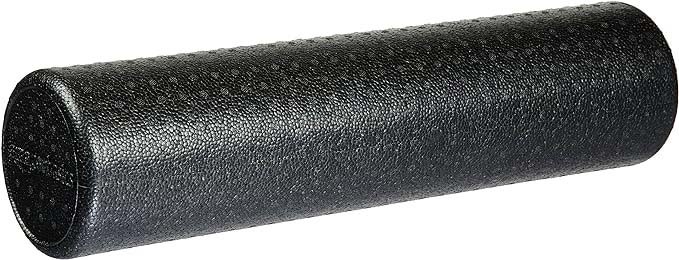
Massage guns offer deep tissue relief, targeting sore muscles and reducing post-exercise soreness. They’re highly popular among athletes due to their portability and effectiveness. You will find the massage gun comes in handy for times when you are just sitting and watching TV.
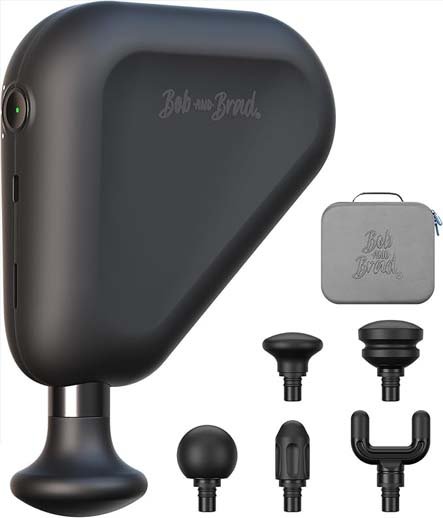
Compression socks are a great tool for recovery, helping increase blood circulation and reduce swelling. They’re ideal for long post-training recovery or even for use during light activities. They work great on long-haul flights by promoting circulation from the lower extremities also helping recovery.

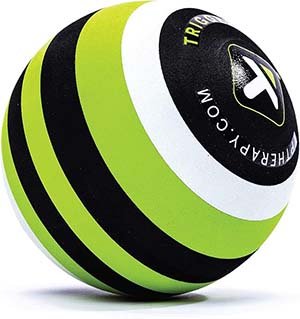
Massage balls offer targeted pressure, perfect for smaller, hard-to-reach muscles that foam rollers might miss. They’re especially effective for foot and calf recovery. You can also activate the foot before you head out for a run or swim.
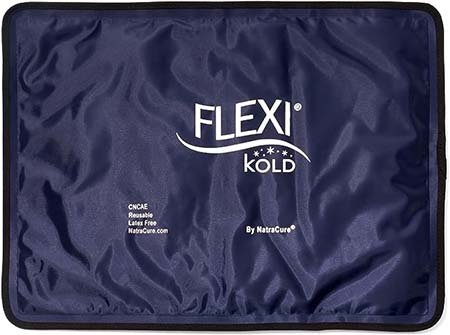
Cold therapy is a classic recovery tool, reducing inflammation and speeding up recovery by cooling muscles after intense workouts. Introducing ice packs is a must for any athlete looking to add to their recovery program.
Investing in the right recovery tools can help you train consistently and perform at your best. Try incorporating these items into your recovery routine to stay injury-free and ready for your next endurance challenge!
Are you ready to take on the challenge of running a marathon? Whether you're a seasoned runner or a complete beginner, marathon training can be a rewarding and life-changing experience. In this ultimate guide, we'll walk you through everything you need to know to prepare for your first marathon. From setting realistic goals to choosing the right gear, we've got you covered. Lace up your running shoes, and let's get started!
Marathon training is definitely more than just running long distances. It's about preparing your body and mind for the demands of a 26.2-mile (42.2 kilometer) race. Proper training helps you build endurance, improve your speed, and reduce the risk of injury.
A good training plan includes a mix of long runs, speed work, and rest days. It's essential to gradually increase your mileage to allow your body to adapt and avoid overtraining. Let's dive into the basics of setting your marathon training goals.
Setting realistic goals is the first step in your marathon training journey. Goals give you a clear focus and help keep you motivated. Here’s how to set achievable goals:
Example Beginner’s Goal: "Complete a marathon in under 5 hours within six months of training."
A well-structured training plan is crucial for marathon success. Here’s what a typical beginner’s plan looks like:
Sample Training Schedule:
Adjust the plan based on your progress and listen to your body.
Proper nutrition and hydration are vital components of marathon training. Here are some tips:
Experiment with different foods and drinks during training to see what works best for you.

Having the right gear can make your training more comfortable and effective. Here’s what you need:
Take the time to find gear that fits well and meets your needs.
Staying motivated throughout your marathon training can be challenging. Here are some strategies to keep you going:
Remember why you started and keep your end goal in sight.
The week leading up to your marathon and race day itself are crucial. Here’s how to prepare:
By following these tips, you'll be ready to take on your marathon with confidence.
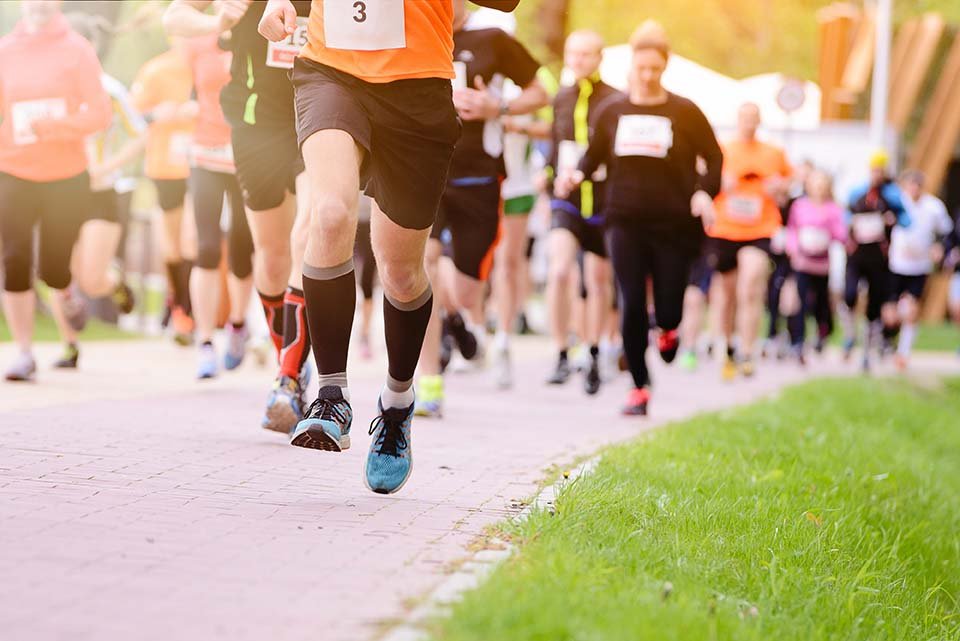
Congratulations! You've crossed the finish line of your marathon. While finishing the race is a huge accomplishment, your journey doesn't end there. Proper recovery is essential to help your body heal and prepare for future runs.
Recovering properly will help you bounce back stronger and ready for your next challenge.
Marathon training is a challenging but incredibly rewarding journey. By setting realistic goals, following a structured training plan, and taking care of your nutrition and gear, you’ll be well on your way to crossing the finish line. Remember, every step of the journey is progress. Find your race, start your training, and don’t hesitate to share your experiences or ask questions in the comments below. Happy running!
For those who are passionate about both running and travel, the idea of combining these two interests is a match made in heaven. Running a marathon in a new destination not only fulfills our athletic ambitions but also opens the door to unique cultural experiences, breathtaking landscapes, and unforgettable memories. You will be pleasantly surprised just how many places you can visit where there is a marathon waiting for you to run. If you've never considered it before, here are some compelling reasons why running a marathon is a fantastic excuse to travel.
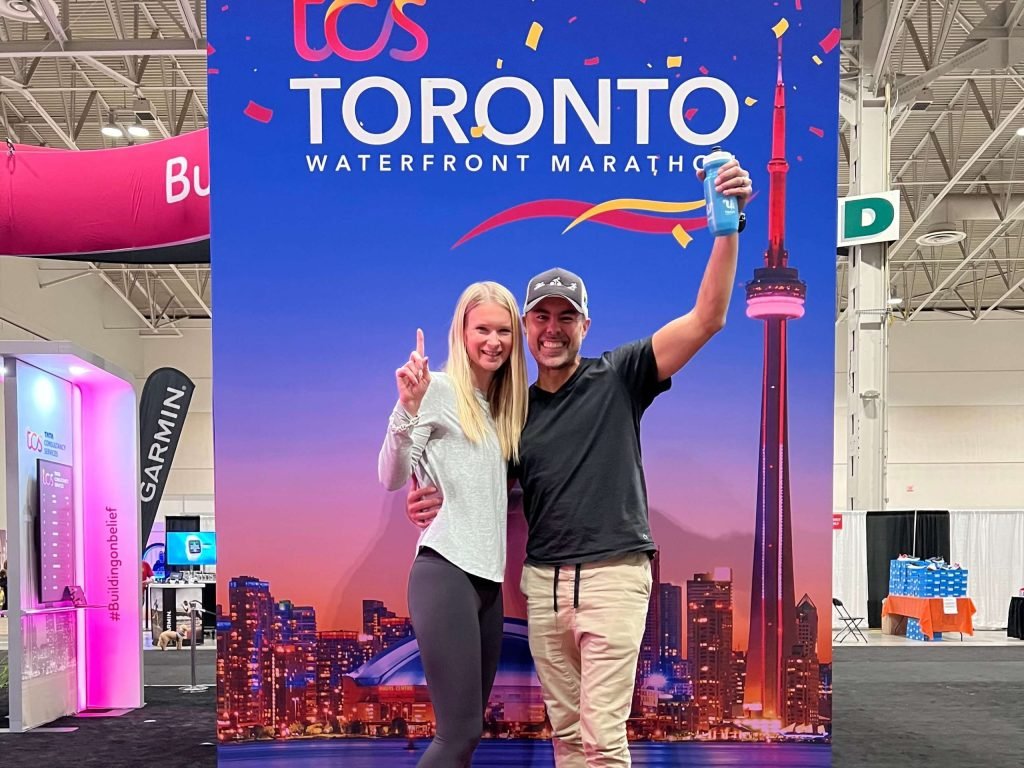
One of the most exhilarating aspects of running marathons in different locations is the opportunity to explore new destinations and cultures. Traveling for a marathon means venturing beyond your local routes and discovering destinations you might have only dreamed of visiting. Each new race location offers fresh terrain to conquer, from the urban streets of major cities to the serene beauty of countryside routes. It also boosts your commitment to the training. You've booked the flight and hotel, now you need to make sure you get those long runs in! Having something to look forward to makes the whole process exciting.
Running a marathon in another country or city provides a unique way to immerse yourself in a different culture. As you interact with local runners and spectators, you gain insights into their traditions, language, and way of life. Sharing the race with locals and fellow international runners creates a sense of unity that transcends language barriers. You may find yourself tasting authentic cuisine at pre-race pasta parties, witnessing local customs during race festivities, or simply exchanging smiles with fellow runners along the route. These cultural encounters turn a marathon into a profound and memorable cross-cultural experience. It can also be a wonderful way to soak in the city, to see areas that you may have otherwise missed.

Many marathon races are designed to showcase the natural beauty of their host regions. Imagine running along the picturesque coast with the sound of crashing waves in the background or through lush forests with the scent of pine in the air. The beauty of the landscape can be an inspiring backdrop to your race, making the experience even more unforgettable. Whether you're running amidst the breathtaking fjords of Norway, the vineyards of the Napa Valley, or along the Great Wall of China, the scenery provides not only a visual treat but also a constant source of motivation.
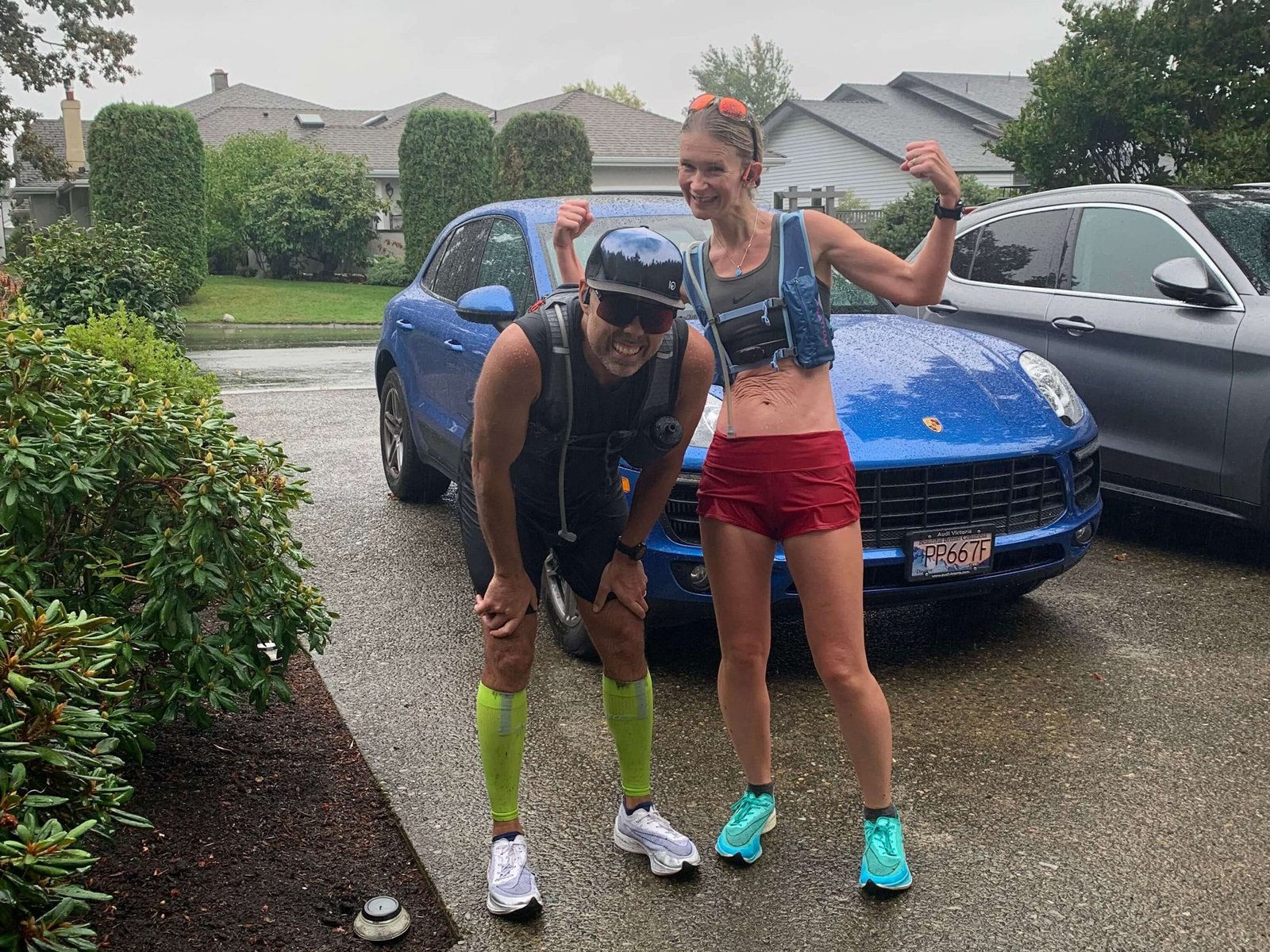
Running a marathon is a challenge that unites people from all walks of life. Traveling for a race gives you the opportunity to meet like-minded individuals who share your passion for running. Whether you're exchanging stories with fellow runners at the starting line, forming lasting friendships with your travel companions, or simply sharing the highs and lows of the race with others, the marathon community is a warm and supportive one. The connections you make during these adventures can extend beyond the race itself and result in lifelong friendships.
Running a marathon in an unfamiliar place can be a test of personal growth and resilience. Navigating new environments, dealing with unexpected challenges, and pushing through discomfort can lead to significant personal development. The experience can boost your confidence, independence, and adaptability. You'll return home not only with a marathon medal but also a stronger sense of self, having conquered not only the race but also any uncertainties that arose during your journey.
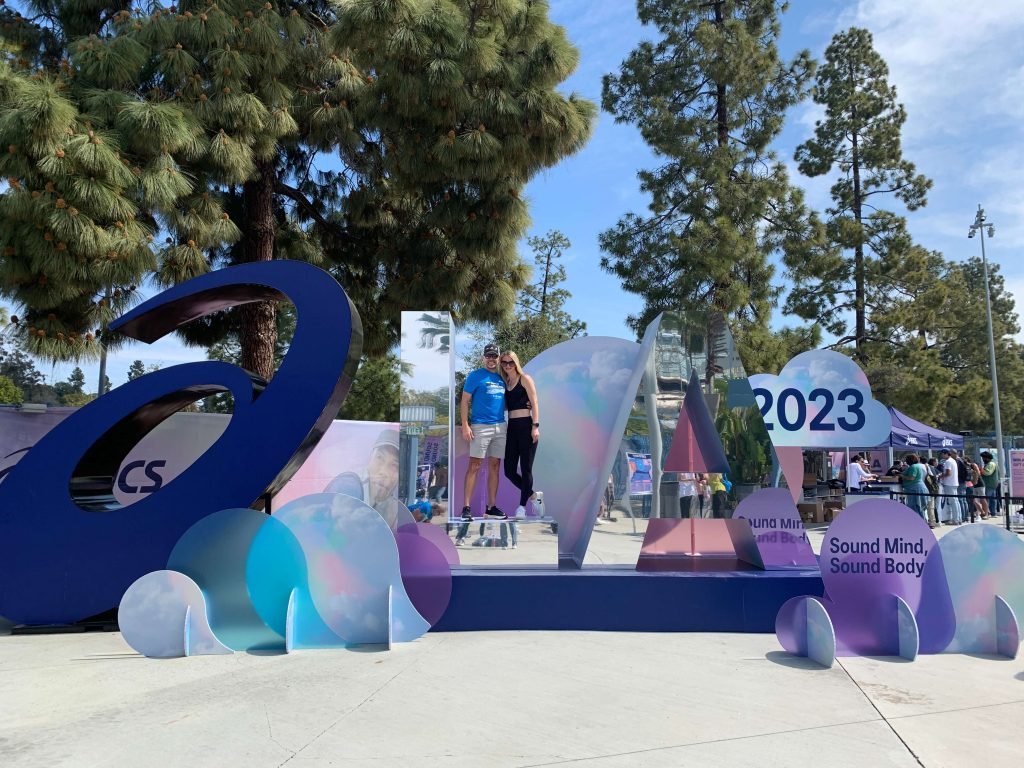
If you needed an extra push to justify your travel dreams, running a marathon provides the perfect excuse. It's not just about running; it's about the entire journey. From the moment you start planning your trip to the exhilarating post-race celebrations, the entire experience is an adventure that you eagerly anticipate and remember long after the race is over. The marathon becomes the centerpiece of a larger travel narrative, transforming your journey into a multi-layered exploration of both the destination and your own capabilities.
The memories created while traveling for a marathon are some of the most enduring. You'll always remember the stunning views that unfolded before you, the camaraderie with fellow runners from around the world, and the sense of accomplishment as you crossed the finish line in an unfamiliar place. These memories become a part of your life story, enriching your personal tapestry. They're the tales you'll share with friends and family, the stories you'll revisit to relive the excitement and adventure of your marathon travel experiences.
Running a marathon in a new destination is a powerful way to combine your passion for running with the joys of travel. It's not just about running; it's about the entire journey, from planning your trip to post-race celebrations. Traveling for a marathon becomes an adventure that you eagerly anticipate and remember long after the race is over. Happy running and happy traveling!